There are millions of internet searches every single day with the word diet in the search term. Whether the search is motivated by weight loss, health reasons, or just boredom with an existing diet, we are constantly seeking out the next great diet revelation. We give this new diet our all, maybe invest in some new kitchen equipment, but how long until we realise that the promise of our new diet was an empty one? We didn’t lose the weight that was promised, or worse we did but the diet was unrealistic over the long term, and we piled the weight back on. The recovery to good health never came.Usually a diet is based on theory not experience, with the sole aim of financial gain to the inventor, who has never suffered from the health condition(s) in question.
Frequently our new diet is unenjoyable, not varied enough, and downright bland, how can this diet possibly be sustainable in the long term? Do you know of any other species on the planet that doesn’t know what to eat? Every single species on this planet, with the exception of humans, knows exactly what to eat to get the right micro and macro nutrients, maintain the correct weight, and generally live a healthy life. We’ve lost our way and the problem has been exacerbated by our hectic lifestyles. Ready meals and processed foods provide a solution to this problem with disastrous consequences. Heart disease, Type 2 Diabetes, and various digestive illnesses are on the increase and have been described as 21st century illnesses. So how do we correct this imbalance in our food choices?
We can gain inspiration from our Palaeolithic ancestors, or look to our Mediterranean cousins with their ultra-healthy way of life that’s been forged over thousands of years, but let’s not overlook our own heritage. My grandparents lived well into their late 90’s, in fact one of my grandmothers is still alive and well at the grand old age of 96. I’ve often thought about their longevity and what their secret was. Both pre and post-war (WW2) conditions were tough, wages didn’t go a long way like they can do today, and the ‘old’ generation had to use a lot of ingenuity to make meals interesting, tasty, varied and most importantly inexpensive. It’s a fact throughout the UK that modern houses come with very small gardens, with the emphasis placed on entertaining & relaxing and all produce these days is bought in rather than home produced, (although we are on the verge of a revolution as more people want to know the origin of their produce).
If you want to buy a house in the UK with a good sized garden then you have to look to the houses built pre 1970’s. Most of the older generation needed a good sized garden to grow their own fruit & vegetables, maybe keep a few chickens to augment their diet with eggs and meat, and it’s also a fact that it was fairly common for a pig to be kept at the top of the garden, but it’s fair to say that most emphasis was placed on growing fruit & veg. Meat was expensive so meals were augmented with fish, offal, dairy, and once or twice a week prime cuts of meat may have been consumed, but similar to the Mediterranean Diet fruit and veg were the main sources of nutrients within their diet and provided the base for every meal.
As a child growing up times had changed for the better with most produce readily accessible and much cheaper than in the old days. My grandparent consumed plentiful amounts of saturated fat, protein, and sugar in their diets during their later years, but despite their consumption of ‘unhealthy’ fats and sugar why did they still live long and active lives? Because their diets were packed full of vegetables and to a lesser extent fruit and as we will learn throughout this blog, soluble fibre is one of the most important, and one of the most overlooked, nutrients in our diet. I believe it is the consumption of fruit & veg and in particular their content of fibre, macro & micro nutrients, and phytochemicals that prevented some of the ‘bad’ foods from causing serious disease and shortening their longevity of life.
The Dysbiosis Diet takes some of its inspiration from a combination of both the older generation’s diet and the Mediterranean Diet. I’m also very big on smoothies and soups as they were key to helping me recover from digestive illness. However, it’s all well and good eating healthy foods to prevent dysbiosis but eating these foods once dysbiosis of the digestive system has taken hold will prove unhelpful in curing the problem. The cure for dysbiosis lies in the introduction to the Dysbiosis Diet of fermented foods and a few carefully chosen supplements. The Dysbiosis diet is the sole result of my battle with digestive illness. It’s nutritious, varied, very enjoyable, but most importantly, it works! The essence of the Dysbiosis Diet is a 4-step approach to clear the GI tract of pathogens, rejuvenate the entire colon, and prevent access to the small intestines. This entire process can be shown through the 4 p’s of the Holobiont Diet.
The purge phase steadily acidifies the entire digestive tract throughout a 14 day period. This kills pathogenic yeasts and bacteria in the mouth, the small intestines, and the colon.
On day 5 of the Holobiont diet the prepare phase is started. Throughout this stage our diet will be rich in prebiotics which not only offer conferred benefits in their own right to our digestive system, but provide a fuel source which will encourage transient commensal bacteria to take up residence in the space left after the purge phase. Prebiotics will also encourage any existing good bacteria to flourish and multiply.
Day 8 sees the introduction of the populate phase to our diet and the inclusion to the Holobiont of probiotics, the friendly bacteria that will top up any existing bacteria in the colon, or any bacteria that have taken up residence after being introduced during the Purge phase.
Finally day 9, the propagate phase, combines the previous 3 phases to provide a long lasting diet that will maintain a healthy digestive system indefinitely.
Hippocrates once said “all disease begins in the gut”. This may not be entirely true of all diseases, but many diseases begin in the gut. Conditions that have been linked to dysbiosis include:
Irritable bowel syndrome
Candida overgrowth
Oral thrush
Acid reflux
Gastritis
Stomach & duodenal ulcers
Bloating
Coeliacs disease
Diabetes
Polycystic ovary syndrome
Dementia
Parkinsons disease
Depression & anxiety
Constipation
Diarrhoea
Excessive flatulence
Haemorrhoids
Crohns disease
Bowel cancer
Colitis
Leaky gut syndrome
Obesity
Liver disease
Heart disease
Skin conditions such as Eczema
Food inolerances
This is truly an extensive list of conditions caused by dysbiosis, some of them very serious. It’s remarkable to think that many of the illnesses on this list are linked to an imbalanced digestive system, but all of these diseases have been scientifically proven to be linked to a state of dysbiosis in the gut.
My illnesses
If you have read my story in the about me section then you will know that my own dybiosis started during childhood, and since then I’ve suffered from many diseases caused by dysbiosis throughout my life. From the above list I’ve suffered from IBS, candida overgrowth, acid reflux, oral thrush, bloating, both depression & anxiety at various points of my life, constipation, excessive flatulence, and chronic haemorrhoids. My 21 year old daughter has been hit the hardest due to excessive antibiotic use from when she was a baby up until the age of 20 when they finally removed her tonsils. She has many more illnesses listed above, but I’ll explain her story in more detail in another post. Suffice to say she is now on the road to recovery by following the principles laid down in the Dysbiosis Diet.
The benefits of hindsight would indeed be invaluable from an early age. Unfortunately it isn’t until we contract one or more of these horrible diseases that we are truly motivated to take action. So what exactly is dysbiosis?
What is dysbiosis of the gut?
The definition of dysbiosis is ‘an imbalance between the types of organism present in a person’s natural microflora, especially that of the gut, thought to contribute to a range of conditions of ill health’.
Your body is full of harmless colonies of bacteria, yeasts, and other organisms. At present there are over 1000 different species of bacteria that reside in your gut (but only 150 to 160 different species are predominant), and scientists are constantly discovering new species every day. All of these bacteria make up what is known as our microbiome, and together they form a mini eco-system.
Remarkably our colonic bacteria can
weigh a staggering two kilogrammes. They all have their own little niche with
some bacteria feeding on whatever is left from the digestive process such as
fibre and amino acids.
How do our bacteria feed?
Some of the bacteria in our colon
feed on soluble fibre, whilst other bacteria feed on protein or more
specifically amino acids. Some of the by-products produced by these bacteria
may be consumed by other bacteria residing in the colon, a process known as cross-feeding.
We also have colonies of yeast which
reside in the lower portion of the colon. These yeasts, such as Candida
Albicans and Saccharomyces Boulardii, feed on any sugar that has escaped
digestion and also not been metabolised by the bacteria further up the colon
(it’s estimated that about 5% of digested sugars reach the colon).
The sizes of these groups of specific bacteria and yeast are dependent on a number of things including the mobility of the bacteria (some have a tail called a flagella which allows them to move). Also, their ability to produce substances which are harmful to other bacteria, for instance the Lactobacillus family produces lactic acid which kills some of the other bacteria and yeasts. In addition the cross feeding bacteria will be in close proximity to the bacteria that provide them with a food source. There are many different reasons why bacteria and yeasts are located in certain parts of the colon and this mini ecosystem is finely balanced.
An unbalanaced microbiome
The by-products that are produced by
our colonic microbiome keep us in good health. Short chain fatty acids help to
nourish the cells that line the digestive tract (epithelial cells). Some
bacteria produce vitamins which are then absorbed into the bloodstream. Other
bacteria help to regulate the muscular wave like contractions that propel food
and waste through the digestive system (known as peristalsis).
If the microbiome is unbalanced then
colonies of bacteria that were harmless will suddenly increase in numbers. In
turn the volume of their by-products increases and causes harm to our digestive
system which leads to a state of dysbiosis. In particular, yeasts such as
Candida Albicans can spread rapidly throughout the digestive tract and they
produce some very harmful by-products.
Causes of dysbiosis
A disruption to the balance of our
microbiome can be caused by the following:
Antibiotics
Excessive alcohol consumption
The use of steroids
Chronic stress
Artificial sweetener
Over consumption of any one particular macro nutrient
A diet too low in fibre
Of all the causes listed above the prolonged use of antibiotics is the most insidious cause of dysbiosis. In the right circumstances antibiotics can save your life, but often a course of antibiotics is unnecessary. They do not discriminate between good or bad bacteria and can wipe out your microbiome in an instant. This is exactly what happened to me and I had to learn how to completely re-build my microbiome. Right up until my late 20’s my dysbiosis was caused by a lack of dietary soluble fibre. I ate plenty of fruit, but barely touched vegetables, and that lack of such a rich source of soluble fibre had major implications on my microbiome. More recently, two heavy courses of antibiotics all but wiped out my microbiome and caused me to suffer from a chronic candida overgrowth.
Symptoms of dysbiosis
Some of the symptoms of dysbiosis are the same as the illnesses listed above. This is because both symptoms and illnesses are conditions of dysbiosis. Take constipation as an example, it can be caused by a reduction in certain bacteria such as Lactobacillus, and an increase in other bacteria such as Clostridium(1). Clearly it is an illness caused by an imbalance of gut bacteria as well as a symptom of an imbalance in gut bacteria.
Bloating after eating
Abdominal pain (especially after eating)
Pain in the chest, upper back, or throat
Coughing during the night
Oral thrush
Yeast infections
Groin pain
Food intolerances
Allergies
Brain fog
Fatigue or low energy
Mucus in the stool
Bright red blood in the stool
Lower back pain
These are just a few symptoms of dysbiosis, as there are specific symptoms for each condition caused by dysbiosis. In addition, different people can experience different symptoms for the same condition. For instance, when suffering from acid reflux I could experience back pain between my shoulder blades, pain in my stomach area, chest pain, difficulty swallowing and a feeling of fullness in my throat, a bitter taste in my mouth, and coughing during the night due to breathing in acidic vapour. I never had these symptoms all at the same time, maybe a couple of symptoms at different times of the day. And different symptoms during different bouts of reflux.
What should I do if I’m experiencing any of the symptoms
If you’re experiencing any of the symptoms on this list then the bottom line is: go and see your doctor. Implementing the Dysbiosis diet in conjuction with a visit to your doctor is a great head start. If your symptoms are caused by dysbiosis then the Dysbiosis Diet will soon have you on the road to recovery. I’ve had endoscopy, sigmoidoscopy, colonoscopy, barium enema, many ultrasound scans, and more digital rectal examinations than I care to mention. All of them ruled out the serious conditions that shared the same symptoms as dysbiosis.
Herein lies the problem, many different conditions share the same, or similar, symptoms. Trust me when I tell you that Google isn’t going to tell you what condition you have from a set of (shared) symptoms. Google is going to scare you to death! I’ve been down that road too many times. You wouldn’t believe the amount of terminal illnesses I’ve self diagnosed with a bit of help from Google, and the anxiety and worry that have followed.
I can also tell you that your doctor won’t be able to tell you what condition you have from an initial examination. They will have a list of possible causes in mind and will rule these causes out with one or more tests.
Non-diagnosis
It’s when the tests come back negative that the Dysbiosis Diet can be a real help. You see, dybiosis is still relatively new, its an emerging science. It still belongs in the domain of the scientists and research is slow to cascade down to the doctors. Often tests will show up as negative and the doctors have no more avenues to go down. They’re just a puzzled as us. When your tests come back negative it’s a very positive indication that your symptoms are caused by dysbiosis of the gut. This is one of many scenarios where following the principles of the Dysbiosis Diet will provide the cure.
The Dysbiosis Diet is a complete healing plan for dysbiosis. Many existing healing plans give supplements a high priority with the diet element coming a poor second.
The Dysbiosis Diet places the majority of its emphasis on dysbiosis healing foods and only utilises a few carefully selected powerful supplements. I know from personal experience that these supplements work! Why does the Dysbiosis Diet only have a limited inclusion of supplements?
Because during the early days of my candida overgrowth I tried many different supplements and they simply didn’t work! I spent a lot of money on the promise of a quick cure for my dysbiosis. I became very frustrated with the results.
In essence, the Dysbiosis Diet is low in processed foods and refined sugars, and high in anti-inflammatory foods. The diet incorporates foods high in macrobiotics (foods with extremely high anti-fungal and anti-microbial properties). These foods promote dysbiosis reversal, good digestive health, and longevity of life.
Dietary fibre sits at the very heart of the Dysbiosis Diet. Dietary fibre has its own conferred health benefits with regard to dysbiosis. Soluble fibre is the main energy source for our commensal colonic bacteria. Due to the fact that fibre doesn’t get broken down during digestion our colonic microbiome grows. This keeps Candida, other yeasts, and bacteria associated with dysbiosis, to a minimum.
The Dysbiosis Diet is made up of nine fundamental principles which will reverse your dysbiosis. The principles are as follows:
Avoid Foods High in Free Sugars
In our modern diets sugar is found everywhere, and in the form of many different guises. Most of us now know that the over consumption of refined sugar known as ‘free sugar’ isn’t healthy for us. But did you know sugar is also a major contributor of Dysbiosis? In our busy modern lives it’s very hard not to over consume sugar.
The usual culprits of foods high in sugar include carbonated soft drinks, energy drinks, sweets/candy, biscuits/cookies, desserts, cakes, fruit juices, and cereals. There are many more and they all contribute to dysbiosis.
Then there are the foods where the inclusion of sugar is more insidious. These include ready meals, marinades, chutneys & pickles, some alcoholic drinks, condiment sauces, stir in sauces, breakfast bars marketed as healthy, white bread, white rice, and potatoes. Again they are all major contributors to dysbiosis of the gut.
I used to load potatoes up on my plate. They would constitute about 60% of my plate, I would eat them almost daily, and I loved them. I still eat potatoes but now only occasionally. There are far more interesting foods to be enjoyed by following the Dysbiosis Diet.
So how can we class potatoes, white rice, and white bread as sugar? Sugar is a carbohydrate, and during digestion it gets broken down into glucose. This is then absorbed into the blood stream and used by our bodies for energy.
This process happens for all forms of sugar, but starch is also a carbohydrate and is broken down during digestion in exactly the same way. This is the reason why some people can’t lower their blood sugar levels after a diagnosis of type 2 diabetes. The starch is causing the real issue.
Once glucose crosses the intestinal/blood barrier it is used by the cells for energy, with any excess stored as fat. Mainly visceral fat, which gives people that tyre shaped appearance around their mid-rift area.
Pasta is very unique in that it has a relatively low Glycemic Index. It has a low GI because ungelatinized starch granules are entrapped in a sponge-like network of proteins (gluten) within the pasta dough. This is great from a diabetes perspective, but pasta is still carbohydrate dense and the excess will be stored as fat.
Pasta is included in the Dysbiosis Diet in moderation. It’s worth noting though that pasta should be cooked al dente as overcooking it increases its Glycemic Index.
Sorry acid reflux sufferers but you need to stay away from pasta too, at least for the first 8 weeks of the Dysbiosis Diet. This will give your oesophagus chance to heal, and then consume it only occasionally.
So how does sugar contribute to dysbiosis of the gut?
Studies have shown that a diet high in sugar can cause or aggravate acid reflux (1). There is a high correlation between acid reflux and a diet high in free sugars. Cutting out free sugars from your diet should be the first line of defence in any acid reflux management plan. By following the Dysbiosis Diet you will soon feel the improvements to your dysbiosis by adopting a reduced sugar diet.
Secondly, yeasts such as Candida Albicans absolutely adore sugar (2). If the normal balance of the colonic microbiome has been disrupted allowing yeasts such as Candida to enter the small intestines, which is what happened to me. They will colonise the entire digestive tract in pursuit of sugar.
As free sugars get metabolised into glucose in the small intestines Candida will feed on it, depriving us of our energy source. This in turn causes brain fog and fatigue, two major symptoms of Candida overgrowth.
Also, one of many by-products of Candida is carbon dioxide which can lead to severe bloating. The small intestines are not equipped to cope with gas. The number of fermenting microbes present are relatively small compared to the colon, which is equipped to deal with gas. Bloating is a major symptom of dysbiosis.
When I was suffering from Candida overgrowth, I would bloat so badly I thought I was going to burst open. On more than one occasion my partner urged me to call an ambulance due to the severity of the pain. The purge phase of the Dysbiosis Diet sorted this problem out though. in fact I noticed an improvement to my dysbiosis with the first two days!
2. Vegetables Should Form the Basis of The Dysbiosis Diet
Vegetables are absolute powerhouses of vitamins, minerals, phytonutrients, and most importantly soluble fibre. Consume non-starchy vegetables at every meal. Vegetables are an extremely important food in the Dysbiosis Diet, and extremely important to cure dysbiosis.
Due to their sugar content, keep the majority of starchy vegetables to a minimum and only consume once or twice a week. Starchy vegetables include:
potatoes
turnips
swedes (rutabaga)
sweetcorn
squash
carrots
These vegetables are packed full of sugar and are eaten in large quantities. If you’re suffering from reflux then these vegetables are definitely worth avoiding. However most of them are packed full of soluble fibre so shouldn’t be avoided entirely. That’s why we’ve included them to be eaten at least once a week in the Dysbiosis Diet. They still contribute to the fight to reverse dysbiosis.
On the other hand, non-starchy vegetables can be consumed in as great a quantity as you like. They’re low in calories but high in soluble fibre. Non-starchy vegetables include:
Artichokes
peppers
courgettes (zucchini)
Broccoli
Aubergines (eggplants)
Kale
Spinach
Cabbage
Cauliflower
Lettuce
Cucumber
The list goes on and on, but you get the idea.
3. Consume Fruit Daily
Let’s get the controversy out of the way now. Fruit contains sugar! Either in the form of fructose, Sucrose, or glucose.
An excessive intake of fruits high in sugar can aggravate acid reflux and the sugar will be readily consumed by Candida Albicans in the event of a small intestinal fungal overgrowth.
So why not limit the diet to low sugar fruits?
Firstly, the purge phase of the Dysbiosis Diet will remove the small intestines of any yeasts that have taken up residence. Initially I never removed any sugar from my diet and still beat Candida, the purge phase is that powerful, so the consumption of fruits high in sugar won’t cause any problems there.
For sufferers of acid reflux my advice would be to stick to berries (which are low in sugar but high in fibre), and melons which are alkaline and low in sugar, for at least the first 8 weeks of the Dysbiosis Diet. This will ensure the inflamed tissues of the mouth, throat, and oesophagus have time to heal. The Lower Oesophageal Sphincter (LES) tightens up preventing acid from spilling into the oesophagus.
If they can be tolerated thereafter, fruit with a higher sugar content can gradually be re-introduced back into the Dysbiosis Diet.
Finally, and most importantly, the sugar in fruit is bound by soluble fibre!
During digestion the breakdown of sugar by the digestive enzyme Amylase is inhibited because soluble fibre is viscous and provides a protective coating around the sugar. This allows the sugar to travel further down the small intestine until the fibre is eventually stripped from the sugar during peristalsis (the muscular contractions of the digestive system). This allows natural metabolization to occur and ensuring blood sugar levels remain relatively constant.
Fruit is integral to the fight against dysbiosis and is packed with fibre, vitamins, minerals, and phytonutrients. Consume fruit daily. Unlike vegetables limit the consumption of fruit to two or three different varieties a day due to their sugar content.
4. Consume Smoothies & Soup Often
Both smoothies and soups are a great way of incorporating more fruit and vegetables into your diet. They’re also helpful if you’re not keen on vegetables as they disguise the taste of the veggies.
I must admit I wasn’t a big fan of many vegetables until my early thirties. Now I’ll eat all vegetables except for Brussel Sprouts and parsnips, the same two vegetables that my parents tried to force feed me as a child!
Whether it was down to my taste buds changing as I got older, or just down to the fact that I became aware of the importance of vegetables in my diet, I do not know, but I went from only eating sweetcorn and tomatoes to genuinely enjoying nearly every vegetable on the market.
It can be particularly difficult for children, teens and young adults to stomach vegetables. Smoothies are a great way of introducing vegetables into the diet and the bitterness of the veg can be masked by the sweetness of fruit.
Those smoothies which are comprised of berries, and spinach or kale are great introductory smoothies. One of the added benefits is that you can boost the fibre content by adding nuts and seeds. Also, some potent macrobiotics can be included such as yoghurt or kefir. Smoothies played an extremely important role helping me overcome my own dysbiosis.
Smoothies Vs Juicing
I prefer smoothies to juicing and the main reason for this is that during the juicing process the majority of sugar contained in the fruit or vegetables is extracted with the juice. Hardly any fibre is extracted in the juice as all the fibre of any plant is contained in the plant’s cell walls and this is the bit that gets thrown in the bin. As we now know, a lack of fibre is a major cause of dysbiosis. Especially in the colon.
Yes, the juice will contain vitamins, minerals and phytonutrients, but fibre is just as important, and this gets discarded. We’re now in a situation where the sugar has lost its protective coating of soluble fibre elevating our blood sugar levels. Also there is no fuel for the good bacteria in our colon, the bacteria that prevents dysbiosis.
Smoothies on the other hand do include the plant cell walls, so we get all of the fibre contained in the fruit or vegetables. A smoothie will give you every nutrient that the fruit and vegetables contain, juicing doesn’t!
Soup
Soup, in partnership with smoothies, was also a key player in the cure of my dysbiosis. Soups are another great way of disguising the taste of vegetables.
They’re warm, comforting and extremely tasty. It’s much easier to incorporate some of the bitterer but healthful vegetables that really are an acquired taste raw in a smoothie. A variety of different fibre from different plants will in turn provide a variety of different good bacteria in the colon. This in turn will reduce the bad bacteria that are responsible for dysbiosis.
A couple or more of your favourite veg blended up goes a long way towards eating your five a day.
Soup is also a great way of staying hydrated as a large proportion of it is water. It’s very gentle on the digestive system. Also, it’s a wonderful tonic when your suffering with a cold, especially chicken soup (4). But best of all soup is not calorie dense but its fibre content makes you feel full. Making it great for weight loss.
Both Smoothies and soups are integral to the Dysbiosis Diet.
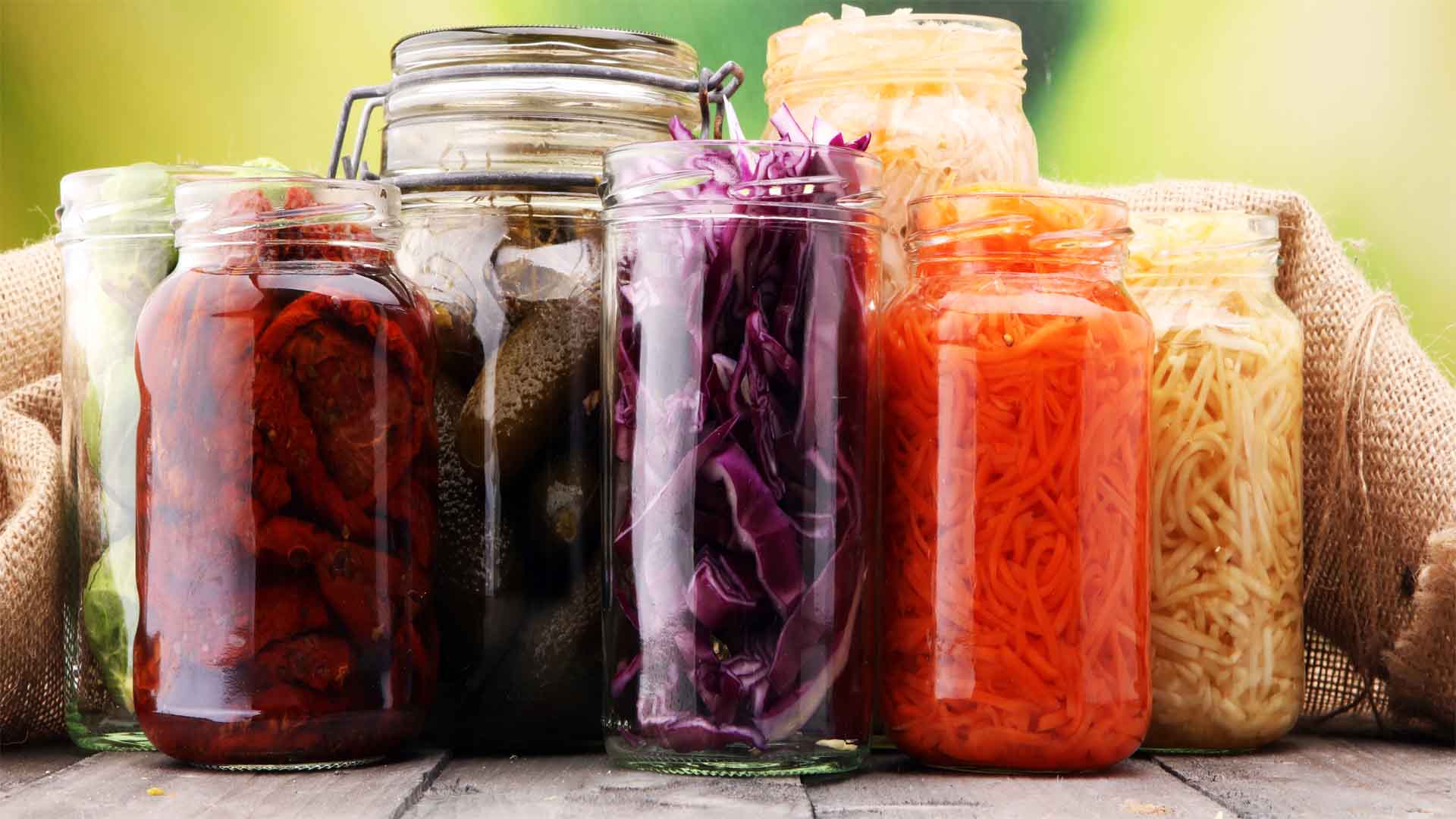
5. Fermented Foods Are Key to The Dysbiosis Diet
Fermented foods are absolute superfoods. They contain live probiotics and macrobiotics (mostly in the form of lactic acid). They’re low in sugar as much of it has been turned into lactic acid by the probiotics and contain many macro & micro nutrients.
Fermented foods contain plentiful amounts of lactid acid bacteria such as the Lactobacillus family which are key players in the reversal of dysbiosis of the gut.
There are a variety of fermented foods you can introduce into your diet, including:
Sauerkraut
Other fermented vegetables
Milk Kefir
Yoghurt
Water Kefir
Kimchi
Kvass
Kombucha
Personally, I prefer the first four in this list and have a particular fondness for Sauerkraut, and other fermented vegetables.
The lactic acid produced by the live bacteria is known to delay gastric emptying which in turn helps regulate blood sugar. It is also a powerful bactericide which kills yeasts and gram-negative bacteria such as E Coli and Campylobacter that cause serious illnesses and are key contributors to dysbiosis.
The live cultures present in fermented food also help to colonise the colon. Lactic acid bacteria in particular congregate around the Ileocecal valve, the point where the small intestines meet the colon. They are the apex bacteria in the colon due to their lactic acid defence mechanism. In a colon free from dysbiosis they prevent yeasts from colonising the small intestines.
There are a few things to look out for when choosing fermented foods:
Check to make sure that what you’re buying hasn’t been pasteurised. I now make my own Sauerkraut but in the early days of illness I used to buy mine from a local polish produce shop. I had a polish friend check the label to make sure it hadn’t been pasteurised.
All of the Sauerkraut in our large supermarkets had been pasteurised. If you can’t get hold of non-pasteurised don’t despair. In my opinion the number one benefit of fermented food is its macrobiotic properties. It’s ability to kill pathogenic yeasts and bacteria.
Pasteurisation does not affect these properties, so pasteurised is fine.
Ensure that your chosen food has actually been fermented and not pickled. I was reading an interesting article about Sauerkraut last week on a website that has a doctor as its owner. They specified that Sauerkraut can often be pickled!
If a food has been pickled instead of fermented then it will lose all of its prebiotic and probiotic benefits as vinegar kills bacteria whereas lactic acid has the same effect on yeasts and gram-negative bacteria. The lactic acid bacteria that give fermented food its probiotic effect happily survive.
Yoghurt can be problematic because the manufacturers will sometimes add sugar to it to appeal to our sweet tooth. Look for natural yoghurts with a total sugar content of around 5 to 6 grams per 100 grams. Some yoghurts can have twice this amount of sugar in them.
6. Choose Healthy Fats
The more astute readers will have noticed that the Dysbiosis Diet draws on many principles of the Mediterranean Diet. Fats are no exception.
There is growing evidence that saturated fats are not the villain they’ve previously been portrayed as, but before we all start rushing to the supermarket to load up on the lard/shortening, it’s worth remembering that studies are still in their infancy.
For me olive oil is still the fat of choice for cooking and dressings. But butter can be used in moderation, if a recipe calls for it.
It’s worth noting at this point that all fats and oils contain a mixture of monounsaturated, polyunsaturated, and saturated fatty acids, but they’re typically called by the name of the fatty acid that’s most abundant. Therefore, saturated fats do form a small part of our overall intake. To maintain good health, it’s all about ratios and quantity.
Certain dairy foods are positively encouraged. Yoghurt and Kefir for their macrobiotic and probiotic qualities, obviously low-fat is best.
Cheese is abundant in macrobiotics and also some cheeses contain probiotics. Mature cheeses have more macrobiotic qualities, whereas milder cheeses will be higher in probiotics. Sheep and goats’ cheeses are a good source of low fat macrobiotics.
Butter also has hidden health benefits. Butter is abundant in a short chain fatty acid called Butyrate which is also produced by certain bacteria in the colon. It’s well known for its ability to help repair and maintain the cells that line the gut (known as Epithelial Cells) and is a key component in the prevention of Colitis and Inflammatory Bowel Disease. Butyrate is a dysbiosis fighting fatty acid!
Eat nuts in moderation as they are a great source of monounsaturated fats. They are packed full of macronutrients and fibre and are a healthy alternative to crisps/potato chips. Almonds, Brazil nuts, Hazelnuts, Pine nuts, Pistachios, and Walnuts are all fantastically healthy types of nut to include in your diet.
7. Choose Your Proteins Wisely
Oily fish such as Salmon, Mackerel, and Trout should be eaten at least twice a week. They contain abundant amounts of Omega 3 fatty acids which have benefits on the heart due to their ability to lower bad cholesterol (low Density Lipoprotein or LDL) whilst increasing the levels of good cholesterol (High Density Lipoprotein or HDL).
Olive oil is abundant in Monounsaturated fatty acids which have similar health benefits.
Consume poultry two or three times a week. It has far less saturated fat and cholesterol than red meat. It’s also a very versatile meat, taking on the flavours of any herbs or spices you care to pair it with.
Limit the consumption of red meat to two or three times a month and regard it as a luxury. They’re dense in saturated fat and proteins.
There are obvious implications to our heart health if we follow a diet high in red meats. Also, there are a couple of implications that lead to dysbiosis of the gut too.
Due to the density of calories in red meat, foods that are high in fibre and antioxidants are sacrificed. A continued supply of proteins, or their constituent parts, amino acids, to the colon coupled with a reduced supply of fibre, will alter the balance of colonic bacteria in favour of amino acid degrading bacteria.
The by-products produced by these bacteria include some pretty nasty carcinogenic toxins.
Secondly, a diet high in meat can cause or exacerbate haemorrhoids, and I’ve experienced this first hand. As already discussed, a high protein diet leads to a shift in the colonic microbiota. The bacteria responsible for regulating peristalsis, those muscular contractions that move food and waste through the gastro intestinal tract, diminish, which causes a slow-down in the mobility of the colon.
Too much water is absorbed from our stool leading to constipation. Hard dry stools lead to straining which in turn leads to haemorrhoids.
There is also an opposite effect depending on the different species that make up an individual’s microbiota. That is a speed up of peristalsis, leading to diarrhoea. This is my own theory based on my own observations and experiences. It highlights how important our microbiome is to our health and longevity.
Processed meats that contain nitrates, nitrites, or sulphites should be categorically avoided. This includes bacon, packaged sliced meat, and any processed meats. They are gut irritants and worse, carcinogenic.
Finally, eggs are an extremely nutritious source of protein and can be eaten regularly. Free range are always best, and eggs laid by hens fed on flax seed will contain good amounts of Omega 3 fatty acids.
8. Treat Grains & Cereals with Caution
Processed grains have already been covered in the above section about sugar, but what about whole grains?
If you can tolerate them then include them in your diet, but only in moderation, about two to three times a week. Most importantly, don’t include them into your diet until you’ve reached the propagate phase.
If you can’t tolerate grains and cereals in your diet yet, wait until two to three weeks of the propagate phase and then try and introduce them. This will give the inflammation in your colon a chance to heal, and your microbiota a chance to establish itself.
If you still can’t tolerate whole grains keep trying to introduce them periodically as your microbiota will need time to re-establish itself, and in turn calm the bowel.
Unlike the Mediterranean diet where whole grains are consumed daily, The Dysbiosis Diet is a healing diet and whole grains can be harsh on the digestive tract. It’s a well-known fact that IBS can be exacerbated by the consumption of whole grains.
I really can’t tolerate whole grains. No matter how hard I try, and I’ve tried very hard with oats to obtain a healthy dose of soluble fibre known as beta glucans. My IBS will flare up any time I try to reintroduce wholegrains back into my diet. If you suffer from IBS then cut whole grains out of your diet immediately. Most whole grains contain a high ratio of insoluble to soluble fibre. High levels of insoluble fibre aggravate the colon by bulking up the stool, which in turn presses against the wall of a contracted colon. As the bulked up stool passes through any part of the colon that has contracted, the colon walls expand causing nerve endings to signal pain.
Acid reflux sufferers should also cut grains and cereals out of their diet for at least six to eight weeks in conjunction with other recommendations I’ve made. Sugars and starches are not broken down in the stomach. Enzymes start the digestion process in the mouth then continue in the small intestines. They just add to the quantity of food that the stomach has to deal with. This can cause acid to spill into the oesophagus.
Also, despite its fibre content, whole-wheat bread has a glycemic index just fractionally lower than white bread meaning it can increase blood sugar. This is due to the high ratio of carbs to soluble fibre. The soluble fibre offers very little protection during digestion in the small intestines.
Examples of wholegrain foods include:
Bulgar
Barley
Buckwheat
Farro
Freekah
Oats and oatmeal
Quinoa
Brown or wild rice
Spelt
100% whole wheat
Whole grains can be a nutritious addition to your diet but should only be consumed in moderation. They are carbohydrate dense and will cause you to feel sluggish and tired. They should not be a substitute for vegetables because pound for pound vegetables have far more nutritional benefits.
9. Stay Hydrated
We all know we need to drink to stay alive but some of our daily beverages are better for our digestive, and overall health than others.
Caffeinated drinks are not included in the Dysbiosis Diet as they are known to cause both acid reflux and IBS.
Tea was one of the hardest things for me to give up. I’d learnt a hard lesson in early life that consuming coffee exacerbated my IBS, but despite its caffeine content, tea never irritated my IBS.
Tea with milk and two sugars was my absolutely favourite drink, and I could consume 10 mugs of it in a day easily! I worked out that every twelve days I consumed a 1kg bag of sugar in my tea alone.
I believe it was a combination of the sugar and the caffeine that irritated my acid reflux, and I mean really irritated it. Cutting sugar and caffeine out of my diet in conjunction with following the Dysbiosis Diet, prevented my acid reflux from returning.
Caffeine is a stimulant and can cause the body to go into a fight or flight response. The stress hormone cortisol floods the body which causes an increase in acid production via the proton pumps of the stomach. This obviously leads to reflux but can also cause gastritis and stomach or duodenal ulcers.
The stress response also leads to blood flow away from the colon which then contributes to IBS.
Carbonated pops/sodas are also off the list due to their high sugar content. This includes those labelled as low sugar as they contain all sorts of different sweeteners. Sweeteners have been proven to kill beneficial bacteria in the colon.
The best way to stay hydrated is to drink good old water, and plenty of it. About two litres a day to be precise. If you’re like my partner and don’t like water, then add a little sugar free cordial to hide the taste.
Of course, smoothies will hydrate you too as will an adequate consumption of fruits and veggies.
Fruits and veggies are full of water and fluid in our food is metabolised in the colon. That’s why slow peristalsis can lead to constipation, with too much fluid extracted in the colon. Fast peristalsis leads to diarrhoea, with too little water extracted in the colon.
Alcohol is definitely off the list with the exception of red wine.
Alcohol is a major cause of dysbiosis when consumed in great amounts and is frequently abused in our modern society. The Mediterranean’s can give us all a lesson in alcohol consumption. A small glass for lunch, and the same for dinner.
Red wine is full of antioxidant, but two in particular, Resveratrol and Quercetin, have proven benefits in stabilising blood sugar, widening blood vessels, minimising blood clots, have anti-inflammatory properties, fights free radicals in the blood, have cancer fighting properties, and can help protect against cognitive decline and prevent plaque formation in the brain.
It’s also a relaxant so may help calm the stress response detailed above. A word of warning, some red wines have been proven to cause migraines due to their high tannin and sulphite content. If you suffer from migraines do your research and look for wines without tannin’s and sulphites.
In Summary
The Dysbiosis Diet will heal a range of digestive illnesses. By following the Dysbiosis Diet you will achieve a level of digestive wellness that you may not have experienced for many years. In addition, your overall health will also improve, including your blood sugar and heart health.
Different principles are utilised during different phases of the Dysbiosis Diet. When putting it all together during the propagate phase all of the principals will be utilised together, giving you an ultra healthy diet that can be enjoyed for the rest of your life.
Privacy & Cookies: This site uses cookies. By continuing to use this website, you agree to their use.
To find out more, including how to control cookies, see here:
Cookie Policy